

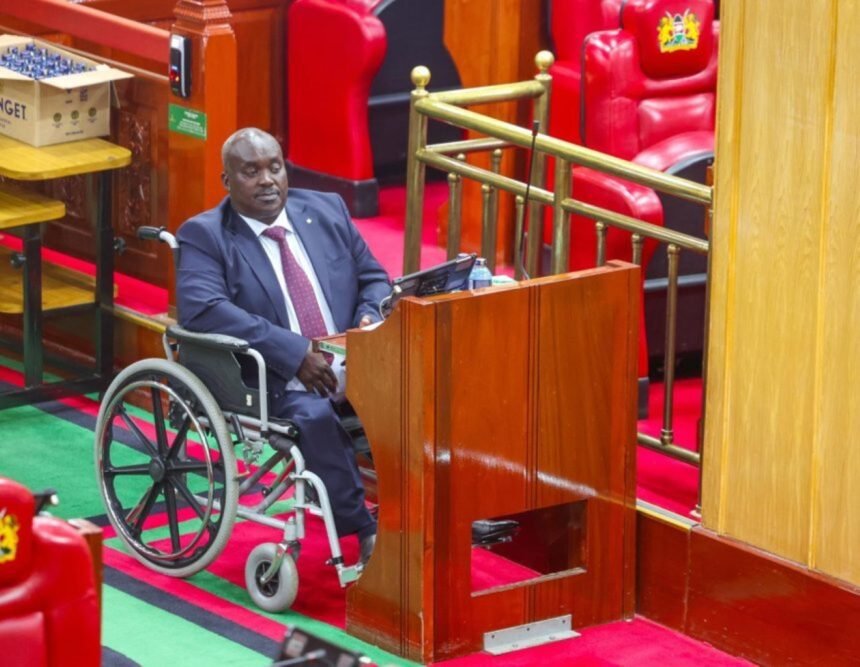
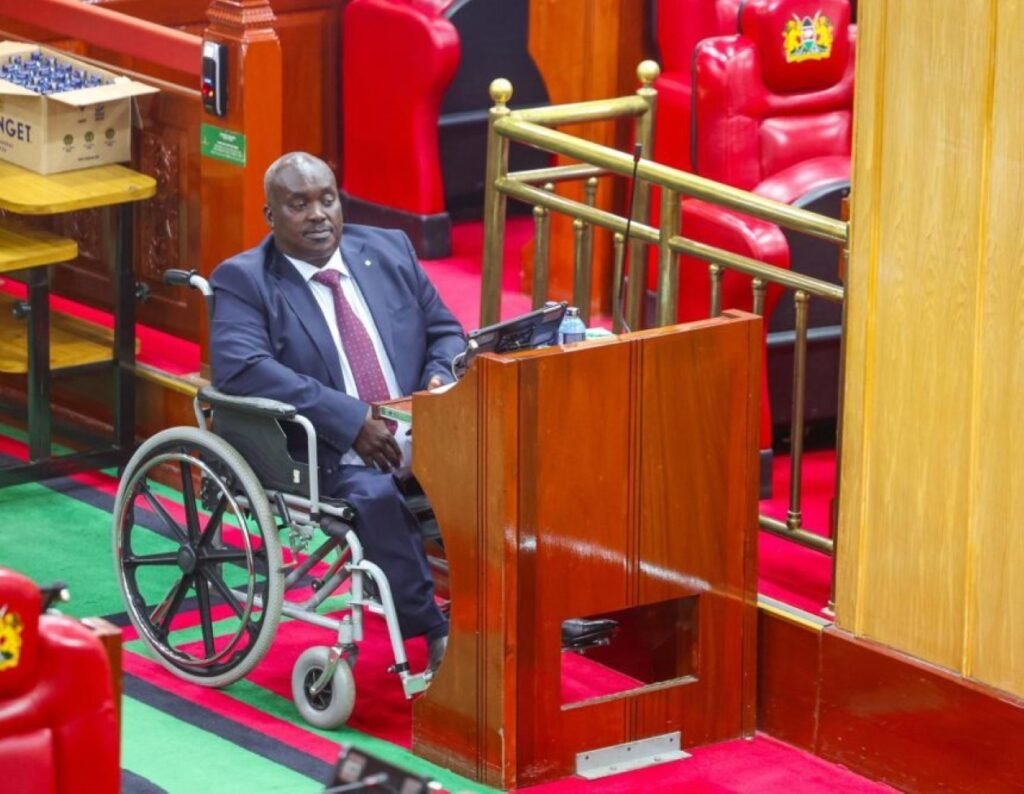
Nominated Member of Parliament Harold Kipchumba (ODM) has issued a sharp call for the National Assembly to move “beyond tokenism” and establish a dedicated oversight framework to enforce the Persons with Disabilities (PWD) Act, 2025.
Speaking during a high-level webinar hosted by the Centre for Parliamentary Studies and Training (CPST), the lawmaker argued that while Kenya possesses progressive laws, a lack of mechanical enforcement has left the PWD community sidelined in governance and employment.
The “Implementation Gap”
The PWD Act 2025 mandates that PWDs occupy at least 5% of elective and appointive positions, reinforcing a core tenet of the Constitution of Kenya 2010. However, Kipchumba noted a glaring disparity between legislation and reality.
“This matter tests not just our laws, but our honesty as a people. We legislate inclusion at 5%, but practice it at 2%. We cannot enforce compliance outside Parliament when we are non-compliant inside it,” Kipchumba stated.
KEDIPA Pushes for Dedicated Committee
The lawmaker, who also chairs the Kenya Disability Parliamentary Association (KEDIPA), revealed that the caucus has formally approached the Speaker of the National Assembly. Their primary demand is the establishment of a Disability Inclusion Committee.

Currently, PWD oversight is handled by the Select Committee on National Cohesion and Equal Opportunity. KEDIPA argues that this broad mandate dilutes focus, and a specialized committee is required to:
- Oversee MDAs: Monitor Ministries, Departments, and Agencies (MDAs) for compliance with the 5% employment rule.
- Audit Infrastructure: Ensure public buildings and digital platforms are accessible.
- Review Political Participation: Track the representation of PWDs in appointive and elective bodies ahead of the 2027 cycle.
Expert Perspectives: Addressing Stigma
The forum, themed ‘Beyond Tokenism: Strategically Mainstreaming Disability Inclusion in Governance’, featured prominent advocates including Dr. Samuel Kabue (Chair, CDRA) and Ms. Elizabeth Chesang (Chairperson, NCPWD).
The experts highlighted several critical barriers:

- Underrepresented Groups: The need to move away from a “medical model” of disability to better support those with psychosocial, intellectual, and neurodevelopmental disabilities, who face the highest levels of stigma.
- Constitutional Requirements: Participants questioned why, 16 years after the 2010 Constitution, the 5% representation threshold remains an unfulfilled promise.
- Systemic Afterthought: Dr Kabue decried that inclusion is often treated as a “box-ticking exercise” rather than a fundamental right.
The Road Ahead
The webinar, which drew over 200 participants via the CPST forum and Parliament’s YouTube Channel, concluded with a consensus that the PWD Act 2025 is a “paper tiger” without the requested Disability Inclusion Committee. With the Nairobi Metropolitan Police Unit and other state organs set for significant operational shifts in May 2026, advocates are demanding that disability accessibility be built into these new frameworks from the onset rather than added as an afterthought.