

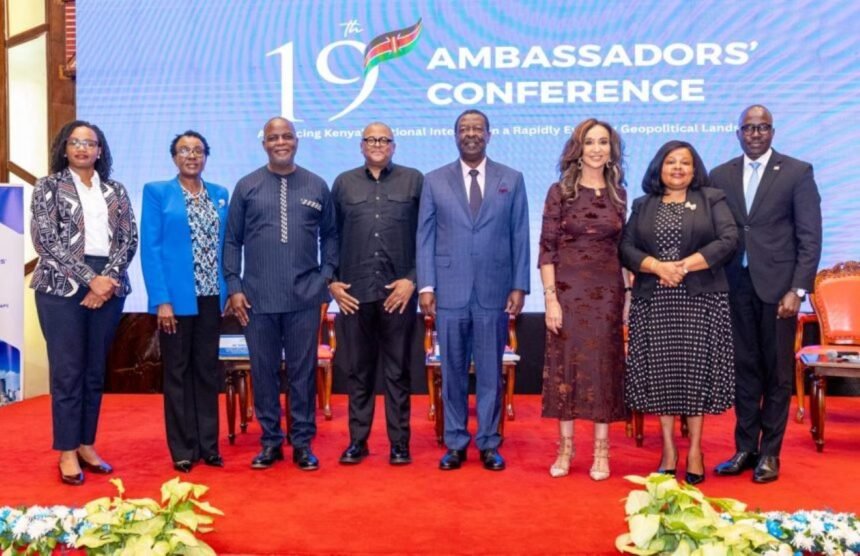
At the concluding sessions of the 2026 Ambassadors’ Conference in Nairobi, communication experts and veteran diplomats issued a stern warning: Kenya must transition from a passive narrator to an active architect of its global image or risk significant economic and diplomatic penalties. The consensus among the panelists was that in a “perception-driven world,” a nation’s narrative is a core instrument of statecraft, directly impacting investor confidence and borrowing costs.
The Cost of Silence: “Geo-Narrative Mastery”
Moderated by Ambassador Lucy Kiruthu (Kenya’s envoy to Thailand), the sessions challenged the traditional, often “stiff” notions of diplomacy. Expert Gina Din Kariuki introduced the concept of “geo-narrative mastery”—the deliberate shaping of global perceptions.
Kariuki warned that in the digital age, “silence amounts to a surrender of influence.” She noted that reputations are now built online in real-time, often long before a diplomat even enters a room. Drawing comparisons to Singapore and South Africa, she emphasized that a country’s “trust scoreboard” is constantly being updated by its consistency, transparency, and speed of response to crises.
Strategic Gaps in Digital Diplomacy
A data-driven audit presented during a Master Class by Thebe Ikalafeng revealed sobering statistics regarding Kenya’s current global footprint:
- Inactive Missions: Of 44 diplomatic missions assessed, 14 percent have no digital presence at all.
- Low Engagement: Only 36 percent of missions maintain active social media engagement.
- Language Barriers: A significant lack of multilingual engagement (French, Arabic, and Asian languages) was identified as a major constraint to reaching host-country audiences.
- Platform Misalignment: Some missions were found to be using platforms that are unpopular or restricted in their host countries, effectively shouting into a vacuum.
While missions in Seoul, Stockholm, London, and Abuja were praised for effective multi-platform engagement, the overall unevenness has created “information vacuums” that others are filling with their own versions of Kenya’s story.

Reclaiming the “Brand Kenya”
Thebe Ikalafeng delivered the most striking critique of the conference: “Kenya’s story is still being told about Kenya, not by Kenya.” He argued that while the country is a global leader in mobile finance (M-Pesa) and renewable energy, these strengths are often overshadowed by “episodic crises” that dominate international headlines because there is no coherent national narrative to counter them.
To reclaim this narrative, experts suggested:
- Authentic Storytelling: Moving beyond tourism and sports to highlight Kenya as a regional hub for innovation and trade.
- Audience-Centered Messaging: Tailoring content to local host-country languages and cultural contexts.
- Proactive Crisis Leadership: Ensuring leaders are visible, data-driven, and reliable during periods of instability.
The Geopolitical Stakes
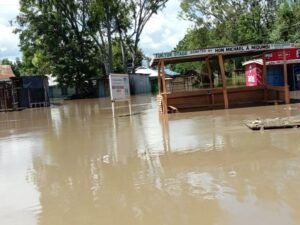
The call for a stronger narrative comes at a critical juncture. With the US-Israel-Iran war causing global oil prices to surge past $115, and Kenya navigating internal challenges like the nationwide flooding and the Enhanced Voter Registration (ECVR), the ability to project stability and competence is vital for maintaining the “trust scoreboard” with international partners.

The message from the Safari Park Hotel was clear: For Kenya, the choice is no longer optional. The country must either define itself through a confident, credible narrative or allow itself to be defined by external lenses that often produce distorted portrayals.