


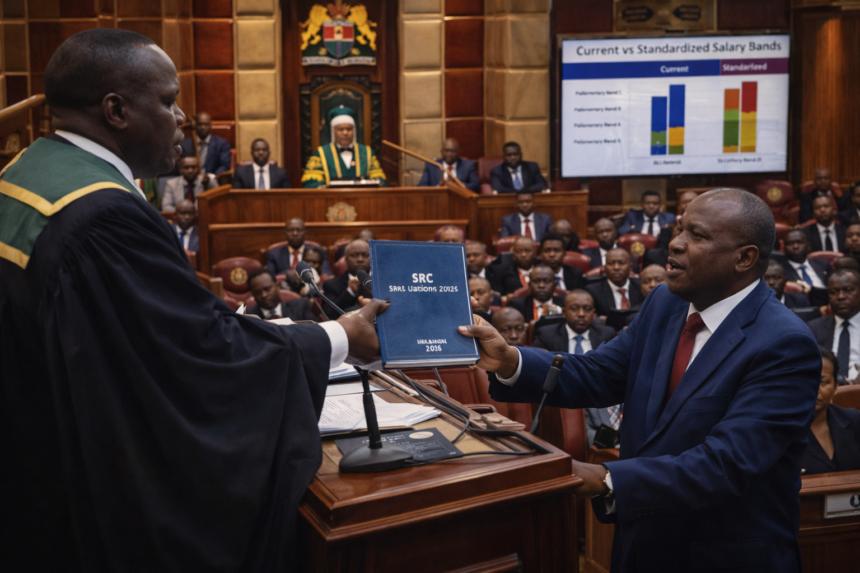
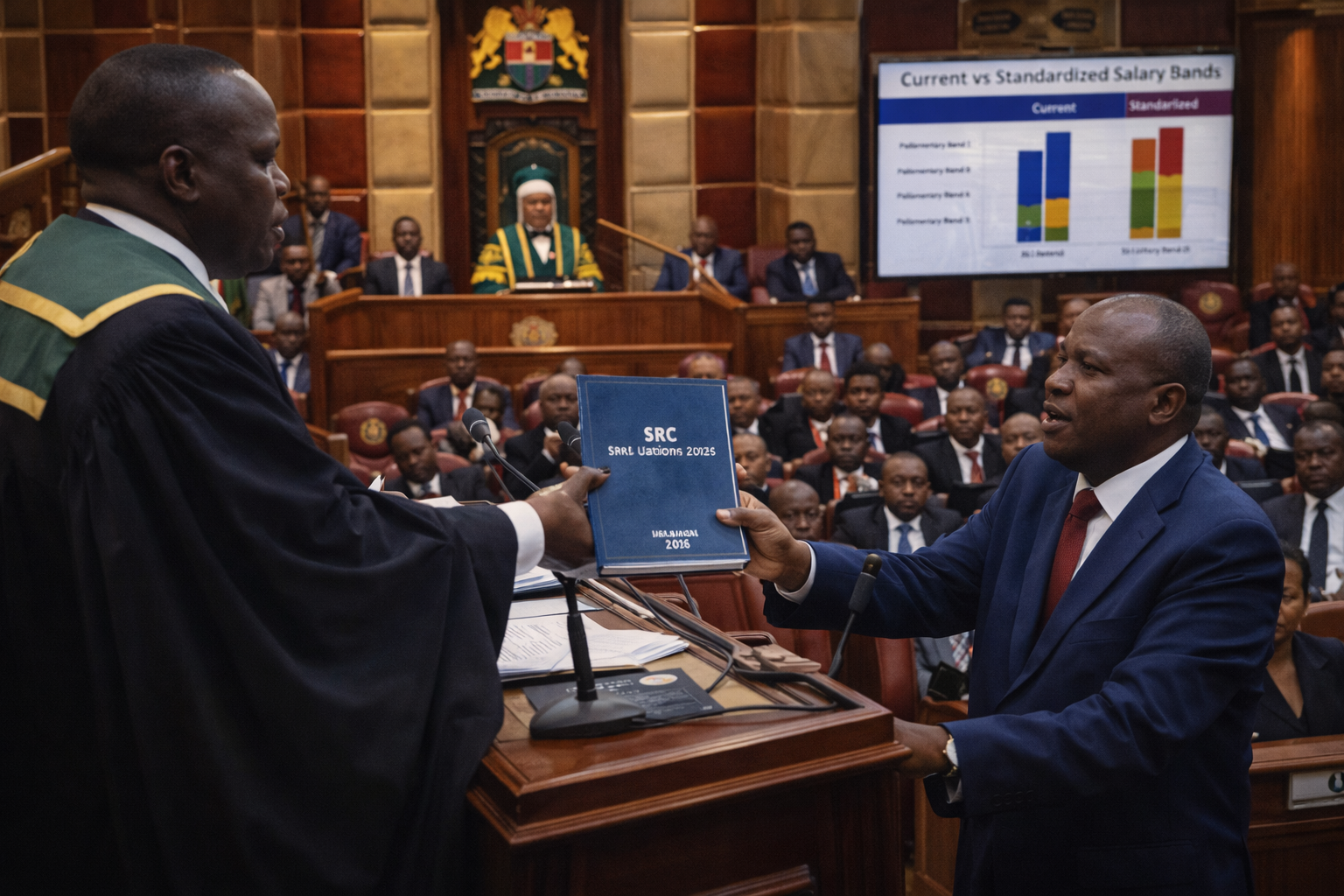
Kenya’s National Assembly has approved new regulations granting the Salaries and Remuneration Commission (SRC) expanded powers to standardise public sector pay. The move aims to address disparities in compensation among civil servants and introduce a more structured and transparent salary framework.
The approved Salaries and Remuneration Commission (Remuneration and Benefits of State and Other Public Officers) Regulations, 2025, establish uniform pay structures across government institutions. Lawmakers said the reforms are intended to eliminate inconsistencies where employees in similar roles earned significantly different salaries due to varied allowance systems.
Under the new framework, the SRC will implement standardised salary bands based on structured job evaluations. Each public sector role will be assessed according to qualifications, responsibilities, and experience, with employees placed within defined pay grades. This approach is expected to replace fragmented payment systems that have persisted across ministries and agencies.
The regulations also introduce strict guidelines on allowances, which have historically contributed to disparities in total compensation. Allowances will now be capped at no more than 40 percent of gross pay, limiting the scope for irregular adjustments that inflate earnings.
In addition, salary reviews will be aligned with national planning cycles to improve fiscal predictability. Officials say this will enable the government to better manage the public wage bill, which has been a recurring concern in budget planning.

Samwel Chepkonga, Chairperson of the Committee on Delegated Legislation, said the revised regulations address previous legal and constitutional challenges that led to their earlier annulment. He noted that the framework provides clarity on the mandate of the SRC and strengthens its authority to regulate public sector remuneration.
Several lawmakers supported the approval, describing it as a step toward fairness and accountability. Mathare MP Anthony Oluoch said the regulations would remove subjectivity in salary determination, while Nyando MP Jared Okello noted that the reforms would correct inconsistencies that had disadvantaged some public officers.
The decision is expected to resolve long-standing disagreements between the SRC and various state agencies over control of salary structures. In the past, some institutions had maintained independent compensation systems, leading to disputes and uneven pay across the public service.

Economists and policy analysts say the reforms could have broader implications for Kenya’s fiscal management. By standardising pay and limiting allowances, the government may be able to contain wage-related expenditure and allocate resources more efficiently.
However, the implementation process is likely to require coordination across multiple government departments to ensure a smooth transition to the new system. Public sector unions and employees are also expected to monitor how the changes affect take-home pay and overall compensation.
The SRC is expected to begin rolling out the new regulations in phases, with detailed guidelines to be issued to government agencies. Further updates are anticipated as institutions align their payroll systems with the revised framework.