


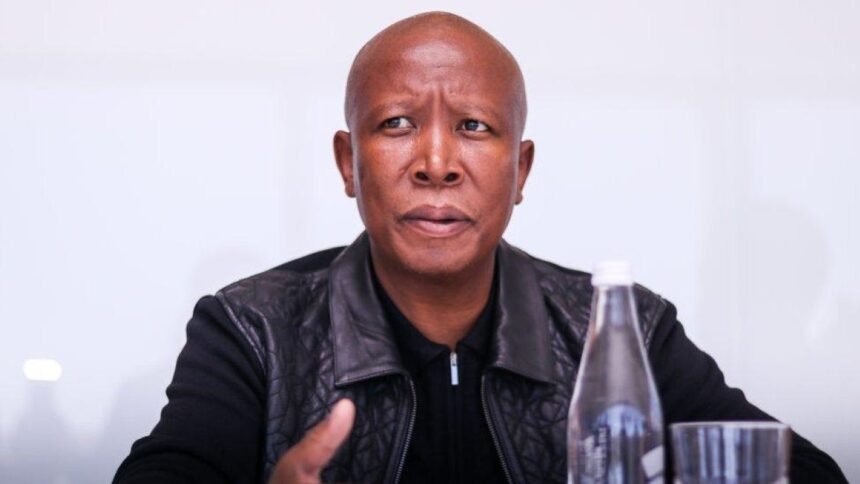
Julius Malema, leader of the Economic Freedom Fighters, has been sentenced to five years in prison following a ruling by the East London Magistrate’s Court over a 2018 firearm incident.
The court found Malema guilty on multiple charges, including unlawful possession of a firearm and discharging a firearm in a public area. Magistrate Twanet Olivier delivered the sentence after a prolonged legal process linked to events during the party’s fifth-anniversary rally held in Mdantsane in July 2018.
The case centered on widely circulated video footage showing Malema firing what appeared to be a rifle into the air at a stadium gathering. Prosecutors argued that the act posed a serious risk to public safety and warranted a custodial sentence. Malema had faced a potential maximum penalty of up to 15 years, but the court imposed a five-year term.
During the trial, Malema maintained that the weapon used was a “toy” and dismissed the proceedings as unnecessary. However, the prosecution presented forensic evidence, including a spent cartridge recovered from the scene, which was linked to a rifle owned by a private security company. The court accepted this evidence in reaching its verdict.
Malema’s co-accused, former bodyguard Adriaan Snyman, was acquitted of the charges brought against him in connection with the same incident.

The ruling has triggered strong reactions among supporters of the Economic Freedom Fighters, some of whom had gathered outside the court ahead of the judgment. Party members and supporters held vigils in anticipation of the outcome, reflecting the significance of the case within South Africa’s political landscape.
Malema has indicated that he will appeal both the conviction and the sentence. Legal analysts note that the appeals process could delay the enforcement of the sentence, depending on the court’s consideration of the application.
The conviction may also carry political consequences. Under South African law, a prison sentence exceeding 12 months without the option of a fine can affect a member of parliament’s eligibility to retain their seat. If upheld, the ruling could impact Malema’s position in the National Assembly during the period of incarceration or appeal.

The case has drawn attention to issues of accountability among public officials and the enforcement of firearm regulations. Legal experts say the outcome underscores the judiciary’s approach to cases involving public safety and high-profile individuals.
Further developments are expected as the appeal process moves forward, with both legal and political implications likely to unfold in the coming months.