


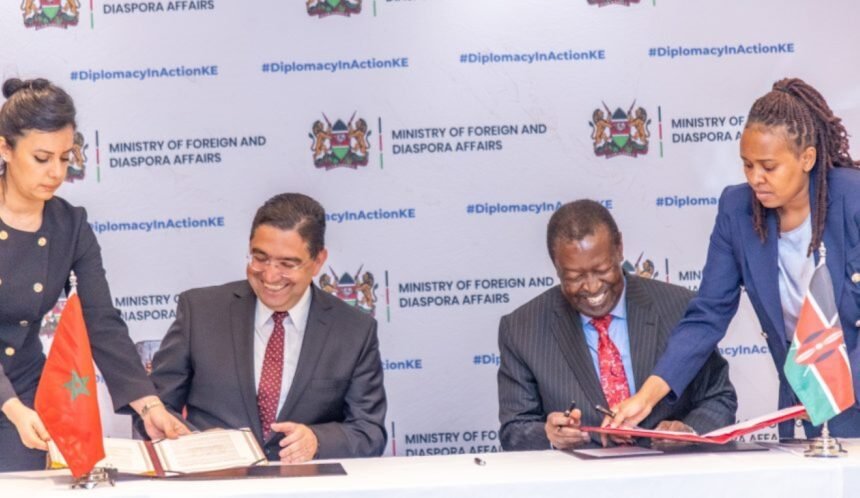
Kenya and Morocco have signed 11 bilateral cooperation instruments, signaling a major deepening of ties between the two nations during the inaugural Kenya–Morocco Joint Commission for Cooperation (JCC). The agreements, co-signed by Foreign and Diaspora Affairs Cabinet Secretary Musalia Mudavadi and Morocco’s Minister of Foreign Affairs Nasser Bourita, cover a wide spectrum of economic, social, and technical sectors.
The JCC provides a structured framework to accelerate trade and investment, with both nations emphasizing the need to leverage the African Continental Free Trade Area (AfCFTA) to correct current trade imbalances and unlock mutual growth.
The 11 Bilateral Instruments at a Glance
The newly signed agreements span critical sectors designed to enhance human capital and infrastructure:
- Agriculture: Focus on affordable fertilizer supply (including a planned OCP Group plant in Kenya by late 2026), technology transfer, and food security.
- Education & Skills: New frameworks for higher education, fully sponsored scholarships (undergraduate to doctoral), and professional internships.
- Health: Collaboration on specialized medical treatments and capacity building, building on past missions such as the cochlear implant initiative supported by Princess Lalla Asmaa.
- Connectivity: A commitment to prioritize the resumption of direct flights between Nairobi and Casablanca under the Bilateral Air Services Agreement (BASA).
- Immigration: Implementation of visa exemptions for diplomatic and official passport holders to facilitate easier government-to-government exchange.
- Other Sectors: Justice, Fisheries and Aquaculture, Gender Equality and Women’s Empowerment, Cultural Cooperation, Sports, and Wildlife Management.
Diplomatic Realignment: Support for Western Sahara Autonomy
In a significant diplomatic shift, Kenya expressed its support for the autonomy plan under Moroccan sovereignty as the “basis for a just and lasting resolution” to the Western Sahara dispute. This move aligns Nairobi more closely with Rabat’s position and the UN-led framework, a development lauded by Minister Bourita as a testament to the “mutual respect and shared vision” between the two states.
Economic Transformation Agenda
CS Mudavadi described Morocco as a “strategic partner” in Kenya’s economic transformation, noting the North African kingdom’s expertise in renewable energy, automotive manufacturing, and pharmaceuticals.
More Read

“The true measure of our success will lie in the impact these instruments will have on the lives of our citizens and not just in the documents signed,” Mudavadi noted, urging technical teams to ensure effective monitoring and implementation.
The Joint Commission resolved to hold its next session in Morocco to evaluate the progress of these 11 instruments and the five earlier MoUs signed in 2025. This growing partnership positions Kenya and Morocco as a formidable “South–South” alliance, bridging East and North African economic interests.