

Kenya has officially initiated a high-level, coordinated diplomatic campaign to secure the election of Supreme Court Justice Njoki Ndung’u as a judge of the International Criminal Court (ICC). The move marks a significant effort by the government to deepen the country’s influence within global legal institutions and project its judicial expertise on the international stage.
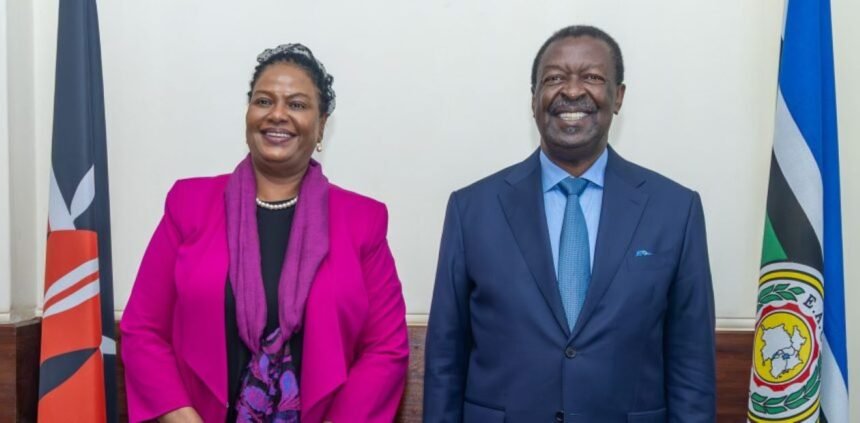
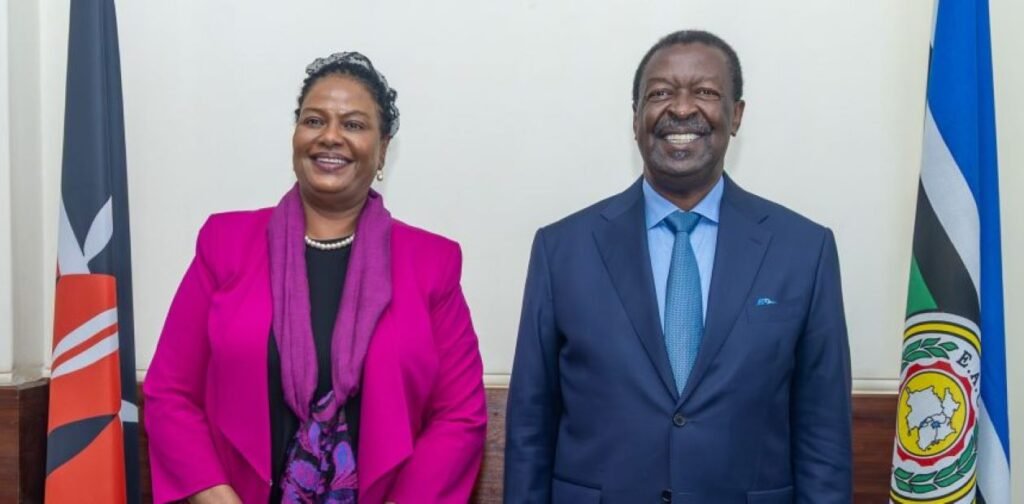
Prime Cabinet Secretary and Cabinet Secretary for Foreign and Diaspora Affairs, Musalia Mudavadi, confirmed that the government has fully endorsed Justice Ndung’u’s candidacy. Speaking following a consultative meeting with Chief Justice Martha Koome and Justice Ndung’u, Mudavadi described the bid as a nationally backed mission receiving the direct support of President William Ruto and the Cabinet.
“Kenya is not leaving the outcome to chance. We are pursuing a deliberate, structured campaign to ensure that our judicial reputation translates into tangible electoral support,” Mudavadi stated. He emphasized that the government has already begun laying the groundwork by developing a campaign framework designed to secure commitments from voting states well ahead of the election.
The election is scheduled to take place in December 2026 during the 25th session of the Assembly of States Parties in New York. Six judges will be elected to the Hague-based court. Justice Ndung’u enters a highly competitive field; as of late March, 15 candidates, including eight from Africa, had expressed interest in the six available positions. With the formal nomination deadline set for April, the race is expected to intensify, placing a premium on strategic lobbying and coalition-building.
At the heart of Kenya’s strategy is a multi-agency committee comprising the Judiciary, the Ministry of Foreign and Diaspora Affairs, and Kenya’s diplomatic missions abroad. This team will be responsible for regional engagement and global messaging. Chief Justice Martha Koome reinforced the narrative of judicial excellence, framing the candidacy as Kenya’s contribution to the evolution of international jurisprudence.
More Read
“Kenya is offering one of its finest jurists to the world,” Chief Justice Koome noted. She urged the government to fully deploy its diplomatic networks, highlighting the independence and growing global respect of the Kenyan Judiciary as critical assets in positioning Justice Ndung’u as a compelling candidate.
Justice Ndung’u, a seasoned jurist known for her role in shaping Kenya’s 2010 Constitution and her tenure on the Supreme Court, framed her candidacy as both a personal and national responsibility. “My election would not just be a personal achievement; it would be a reflection of Kenya’s place in the international legal order,” she said, pledging to represent the country’s legal values with distinction.
The diplomatic push also serves as a test of Kenya’s ability to convert its “soft power”—specifically its judicial credibility—into concrete international influence. Mudavadi called for internal cohesion, urging political leaders and the public to present a united front, warning that domestic divisions could undermine the country’s credibility during the rigorous vetting and voting process in New York.
More Read

The Ministry of Foreign Affairs is expected to host a series of briefings for the diplomatic corps in the coming months as part of the sustained outreach program. If successful, Justice Ndung’u would join a select group of Kenyan jurists who have served in high-ranking international judicial roles, further solidifying the country’s standing in global governance.