

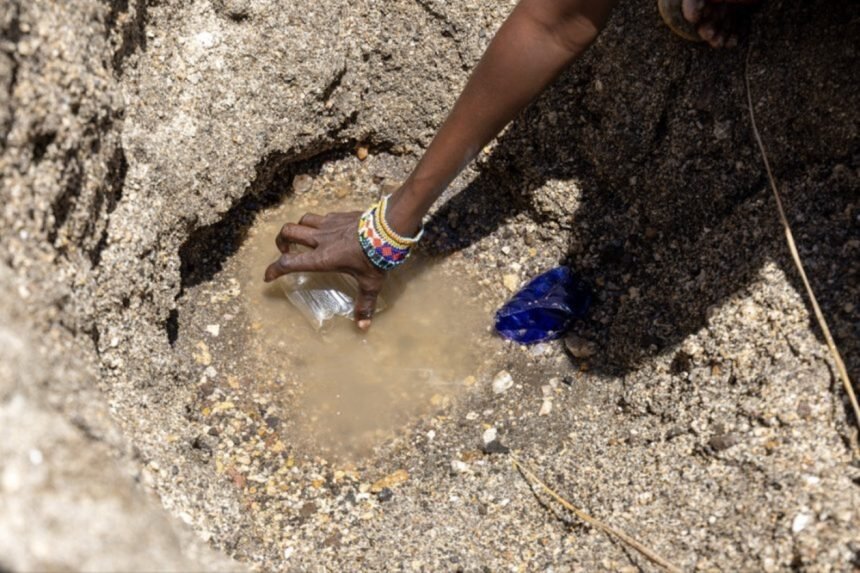
The humanitarian situation in Turkana County has reached a critical breaking point, with thousands of families now forced to consume potentially toxic wild fruits to survive. The escalating drought, driven by consecutive below-average rainfall seasons, has decimated livestock and depleted water sources, leaving millions across Kenya’s Arid and Semi-Arid Lands (ASALs) in urgent need of assistance.
In parts of Loima, the severity of the crisis was illustrated by a recent screening where 100% of children tested were found to be malnourished—80 with moderate acute malnutrition and 20 with severe acute malnutrition.
The Fight for Survival: 24-Hour Boiling Cycles
Faced with total food depletion, residents have turned to foraging for wild edible plants. However, the process is fraught with danger, as many of these species are naturally toxic.
- Traditional Mitigation: Families are relying on ancestral knowledge to render these fruits safe, often boiling them for up to 24 hours to neutralize toxins.
- The Risk: Even with intensive preparation, concerns remain regarding long-term health impacts and the risk of poisoning if the boiling process is rushed due to extreme hunger.
Alarming Statistics and Projections
The National Drought Management Authority (NDMA) and humanitarian partners have released data painting a grim picture of the coming months:
| Indicator | Current Status (Feb–April 2026) |
|---|---|
| National Food Insecurity | 3.3 million people affected in ASAL counties. |
| June 2026 Projection | Expected to rise to 3.68 million people. |
| Turkana GAM Rate | 34.4% (More than double the 15% emergency threshold). |
| Drought Phase (Turkana) | Alert Stage with a worsening trend. |
| Drought Phase (Mandera/Wajir) | Alarm Stage, signaling imminent disaster. |
Export to Sheets

Diplomatic and Humanitarian Response
Netherlands Ambassador to Kenya, Henk Jan Bakker, recently joined the Kenya Red Cross on a fact-finding mission to the region. The envoy witnessed firsthand the “extreme need” caused by a combination of drought and recent international aid cuts.
Cabinet Secretary for EAC and ASALs, Beatrice Askul, warned that the situation is unlikely to improve before the full impact of the March–May rains is assessed. Currently, over 322,000 people in Turkana alone require immediate, scaled-up food assistance to prevent loss of life.
The Regional Outlook
The NDMA has classified the drought status across the country to guide resource allocation:
More Read

- Alarm Phase: Mandera, Kilifi, Kwale, and Wajir.
- Alert Phase: Turkana, Samburu, Marsabit, Garissa, Isiolo, and eight other counties.
- Normal Status: Makueni, Nyeri, Embu, and Meru.
The government, in coordination with county administrations and development partners, is currently reviewing multi-sector interventions through the Special County Steering Group. Efforts are focused on water trucking, specialized nutrition for children, and livestock off-take programs to provide some liquidity to pastoralist households before the rangeland conditions deteriorate further.